

Five ways to turn a farm visit into a green learning experience
6 August 2026
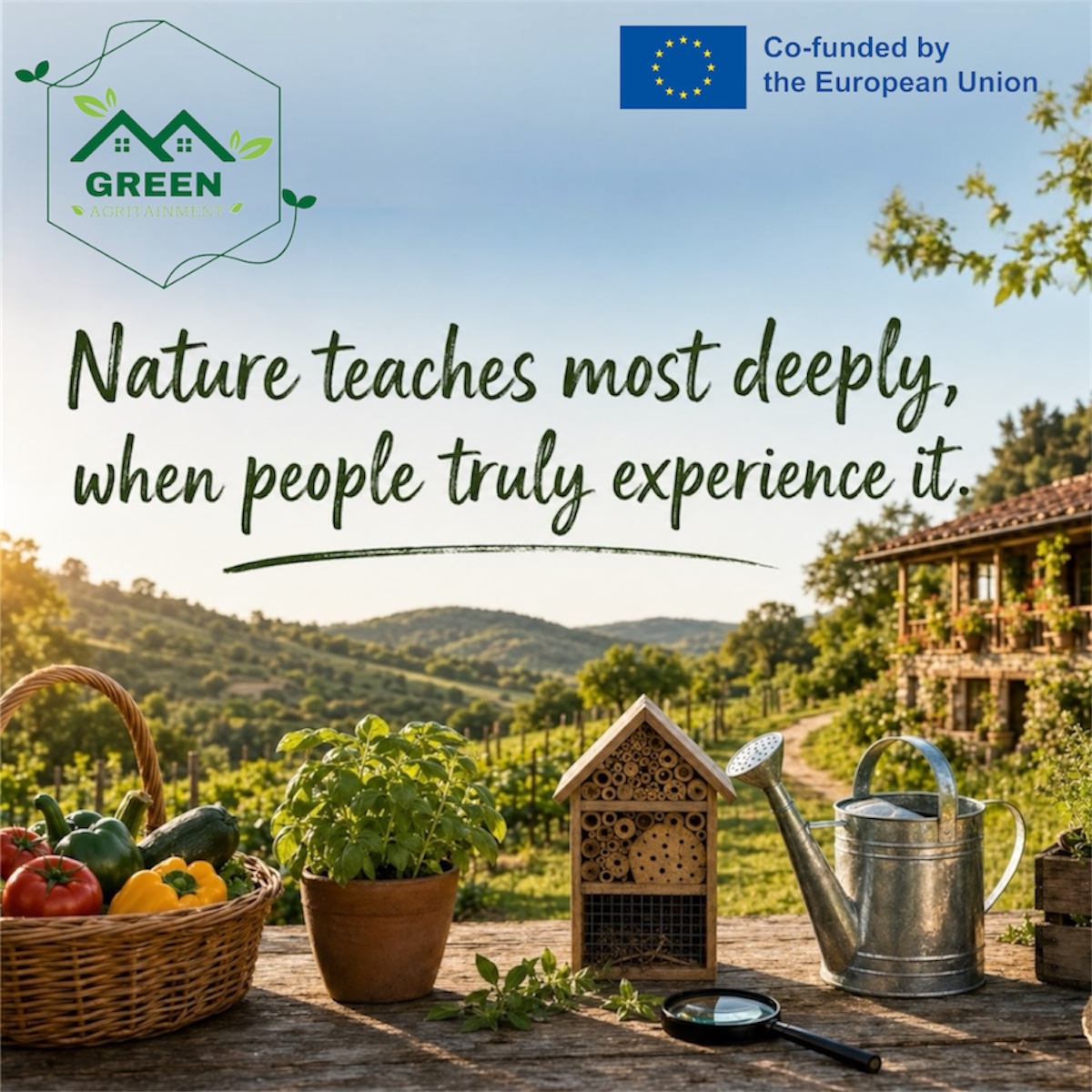
What makes the difference between a pleasant afternoon in the countryside and an experience that visitors remember, talk about and learn from? In the Green Agritainment project we call that difference edutainment: the deliberate design of farm activities so that entertainment and education happen at the same time. Here are five practical ways any agritourism business can turn an ordinary visit into a green learning experience, inspired by the practices collected in the project’s Atlas of VET training practices.
1. Start with the senses, not with the lecture
Instead of opening with an explanation, let visitors touch the soil, smell the herbs, taste the fresh produce. A short sensory walk through the farm creates curiosity, and curiosity is the best foundation for learning. Explanations land far better once people have a direct experience to attach them to.
2. Turn biodiversity into a treasure hunt
Give visitors a simple card with plants, seeds or insects to find around the farm. While they search, they learn to recognise traditional crops and local varieties at risk of being lost — and they discover why agricultural biodiversity matters for our future, without ever sitting through a lesson.
3. Cook zero-waste, together
A shared cooking activity using whey, vegetable scraps or surplus produce shows sustainability in the most concrete way possible: on a plate. Zero-waste recipes are among the most popular practices piloted by the project, because participants take home a skill they can repeat the very next day.
4. Make water visible
Demonstrate targeted irrigation, mulching or rainwater collection with a simple before/after comparison. When visitors see how much water a well-designed system saves, abstract concepts like “resource efficiency” become habits they can transfer to their own gardens and homes.
5. Let the farmer tell the story
Every farm has a story: a family tradition, a rescued variety, an animal with a personality. Structuring the visit around a narrative — rather than a sequence of stops — keeps attention high and gives the environmental message an emotional anchor that facts alone cannot provide.
Where to find 100 more practices
These five ideas are only a starting point. The Green Agritainment Handbook and its Atlas collect more than 100 VET training practices to stimulate green agritainment skills, ready to be adapted by VET trainers and agritourism operators. They can be downloaded free of charge, in five languages, from the project results page.
Green Agritainment: VET Strategies for Edutainment in European Agritourism is co-funded by the Erasmus+ programme of the European Union (project no. 2024-1-IE01-KA220-VET-000254134).
Leave a Reply